
Do Your Business Writing Skills Need Improvement?

There is value in writing well. Even if you are a multi-tasking, frequently-under-stress executive, making time for better business writing is worth it. It is not frivolous or tiresome; indeed, communicating effectively will benefit your career. See below for some tips to get you started.
Think First and Write Afterwards
Your communications need to be engaging and plain-spoken, so that your style of composition does not burden busy people. Effective writing is a cultivated skill. Do not write prematurely; think first about what you want to communicate. People who think as they write do not convey their thoughts clearly. Their communications lack structure. Be thoughtful, and avoid haste. Consider what your reader (or readers) should think or know after receiving what you sent.
Do Not Bury Your Point
Present the main idea first. Impactful business writing has clarity. Summarize your point in the beginning regardless of whether you write a memo, proposal, or an email. It will help you better craft your argument/communication. You will save your audience’s time, and your writing will stand out by being direct.
Avoid Padding Your Message
Emails should be brief, clear, and specific. The beginning sentences should let the reader know about the rest of the message. You will capture the attention of busy professionals by giving them a brief summary of the contents in the opening of your message.
Each word should matter. Be concise. Get rid of filler words and phrases. Grandiose language reflects verbosity, not intelligence. Convey the objective clearly. Use stronger action verbs, and remove prepositions for more direct language.
Avoid Acronyms and Jargon, Where Possible
Industry-specific jargon and acronyms may be necessary sometimes, but when used frequently they indicate laziness and bore the reader.
Write with a Natural Tone
Writing that is either stuffy or overly casual hits the wrong tone. Be natural. Write the content quickly, and edit it later.
Review and Edit the Text
Go over what you write. Read your writing objectively, and remove unnecessary words and content. Readers pay less attention to verbose content. When appropriate, ask for feedback from colleagues, especially if you are writing a proposal, report, or an important memo. Other viewpoints will help you improve.
If your business writing is not as clear as it should be, then focus on how to improve it. Put yourself in your recipient’s place, and consider whether what they will receive is what you wanted to convey. If you have the time, read some books about improving business writing.
- Published in Writing & Editing Jobs, Writing & Editing Resources
Serials and Serialized Fiction—No Longer Fringe Niches of the Publishing Industry

The self-publishing industry and digital media have given new life to serials and serialized fiction. They are no longer “for-free” publications or limited to magazines. A serial is a story written in segments. Daytime soap operas are examples of television serials. Serialized fiction, on the other hand, is a complete story published in segments.
Online Reading, Serials, and Authors’ Intimacy with Readers
In the past, writers like Dickens and Trollope who wrote long books released them as they were writing. George Eliot’s “Middlemarch” was also released this way. Sometimes reader response would make authors modify their work, as happened with Charles Dickens. Dickens altered the end of “Dombey and Son” in response to reader comments.
Serialized fiction made the novels more portable and created a community of readers. Today, digital media is creating a new community of readers as E-readers and mobile devices make fiction portable in the internet age. Successful science-fiction writer John Scalzi began with the serial, “Old Man’s War,” and “50 Shades of Grey” was a serial before it was published traditionally.
E-readers and mobile phones have changed the habits of readers who frequently use these reading sources. Writers have recognized that serials build their readership and allow them more creative freedom than traditional book publishing.
Max Gladstone is among a growing number of writers who have joined today’s serial writing genre. Gladstone is a writer for two fantasy serials. The writer of the “Craft Sequence” series is one of the writers on the Serial Box’s “Bookburners” and “The Witch Who Came in from the Cold” serials.
Capturing Readers with Serialized Fiction
The serialized book publishing method has a proven history of boosting sales and creating anticipation. A French businessman used serialized fiction to create a readership for his daily newspaper in 1836. He serialized Balzac’s novel in segments to hook Parisian readers. That same year serialized fiction began in England with the segmented publication of the “The Pickwick Papers.”
With TV dramas like “Game of Thrones,” House of Cards,” and Downton Abbey,” and serial radio programs hooking their audiences, book publishers would like to boost sales by creating a devoted audience of serialized fiction readers. One of the creative writers taking advantage of digital media is Julian Fellowes, the creator of “Downton Abbey.” Fellowes is publishing his new novel, “Belgravia,” as serialized fiction with weekly chapters released via an app.
Segmented fiction offers writers a new way to reach the reading public. As people spend time waiting, they can be immersed in fiction. Research has also found that people prefer occupied time and complain about unoccupied time. How long will it be before writers can earn income through businesses who want to distract their waiting consumers?
- Published in Writing & Editing Jobs, Writing & Editing Resources
Advice about Screen Writing from the Great Writer-Director Billy Wilder
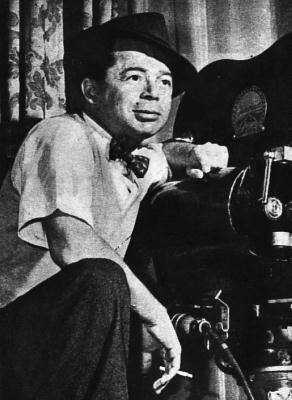
Samuel “Billy” Wilder was born in Vienna, Austria in 1906 and moved to Germany for work. Before he became a screenwriter and director, he was a reporter and drama critic. He subsequently left journalism and became a prolific writer for the German film industry.
From the German Film Industry to Hollywood
Wilder, who was Jewish, came to the U.S. after fleeing Germany to escape the Nazis. He was fortunate to arrive at a time when the studios allowed screenwriters to direct movies made from their scripts. He co-wrote several films with Charles Brackett, including Ninotchka and Ball of Fire.
Wilder’s career as a contract writer with Paramount began four years after his arrival with the film Bluebeard’s Eighth Wife (his first movie for Paramount). The movie studio head at the time was German–born filmmaker Ernst Lubitsch, who had directed Wilder’s script for Ninotchka.
Wilder’s work covered a wide range as revealed by his films Ace in the Hole, The Apartment, Double Indemnity, The Lost Weekend, Sabrina, Some Like it Hot, Stalag 17, and Sunset Boulevard.
Billy Wilder’s Screenwriting Tips
When he was interviewed by James Linville for The Paris Review, Wilder said, “Sometimes when you finish a picture you just don’t know whether it’s good or bad.” Nevertheless, in Conversations with Wilder by the screenwriter Cameron Crowe, Wilder shared his screenwriting tips, among them:
- Remember that the audience is fickle.
- Know where you are going with the plot.
- Grab the audience by the throat from the beginning, and do not let up until the end.
- Allow the audience to add up two plus two to win over the audience forever.
- Give the main character a clean line of action.
- A good screenwriter capably hides the plot points.
- Add to what the audience is seeing in the voice-overs, not what is being seen.
- The end of the movie is triggered by the event occurring at the end of the second act.
- The third act builds the action and tempo until the final event.
- If there is a problem in the third act, the root is in the first act.
- Do not leave the audience hanging at the end.
One of Hollywood’s great writer-directors, Wilder maintained that writing gave the movie its direction. He preferred to write with a partner and co-wrote each one of his twenty-four films. He began writing with a partner because of his limited English but continued it because he liked it.
- Published in Writing & Editing Jobs, Writing & Editing Resources
The Growing B2B Writing Market Offers Opportunities for Freelance Writers

Fifty-four percent of B2B marketers and fifty percent of B2C marketers identified content production as their greatest challenge in the 2015 annual report of the Content Marketing Institute (CMI). This is good news for capable content writers looking for business in this market.
Why You Should Check Out the B2B Writing Market
With rates of $1 per word or more, the B2B writing market is worth checking out due to the growing appetite of businesses for increased content. CMI’s Benchmarks, Budgets, and Trends survey for 2016 revealed that seventy-six percent of marketers intended to produce more content in 2016 than they did in 2015. Fifty-one percent intended to boost their budgets, and for sixty percent content production remained their top challenge.
This indicates a booming market for writers who are skilled in writing content to sell services and/or products to other businesses and to write engaging copy about business problems.
Understanding B2B Content Writing
Since the target audience represents their employers, writers need to have the information required to make the purchase decision and/or compare the offered service/product to other comparable services/products. Potential purchasers need information they can use to justify their selection among companies. This may include background about the supplier, the price, technical specifications, and any other relevant information.
The B2B audience values information, including statistics, about the return on investment from purchasing the services/products being offered. This audience receives information today through a variety of mediums. B2B writing involves press releases, ads, and other marketing materials including articles, white papers, case studies, and blog posts on the company’s website or wherever the potential audience can be reached.
Each kind of for-business writing has a standard format and best practice within its genre. Using social media to connect with the target audience is part of the process.
Skills of Successful B2B Content Writers
Desirable B2B writers know how to write convincing content that is relatable, engaging, and readable. They know how the leadership, marketers, sales force, and customer service departments collaborate to serve the interests of the business.
B2B writers are comfortable with internet-based research. They know how to search online to find relevant information and familiarize themselves with the terminology used by businesses in specific sectors.
Writing search engine optimized content to attract online traffic, including basic knowledge of SEO keywords, is part of the skill set that effective writers need to become successful in this niche market.
With hundreds of thousands of U.S. businesses having websites and/or marketing budgets, there is no shortage of potential clients for interested content writers. If you have the chops, go ahead and pitch your talents to prospective companies. If you are new to the market, learn how to develop your B2B content writing skills before you approach potential clients.
- Published in Writing & Editing Resources, Writing & Editing Jobs