Behind Every Great Writer is a Great Proofreader
Writers are communicators who have the time to craft their message. Yet, no matter how many times they go through their work after they finish writing, they miss typos and other mistakes. In the era of speedier production and widespread Internet usage, typos have become more common. The results may be affecting other modes of communication as well, because typos have become more acceptable, according to the Forbes magazine article, Fall Of The Grammar Snobs: How Typos Became Okay.
Publications are churning out work so quickly that proofreading has suffered. Even the New York Times and other well-known newspapers have not escaped publishing glaring typos. While established names and informal social media communications do not suffer monetary harm, eliminating noticeable mistakes is crucial for many businesses.
Typos Cause Online Businesses to Lose Sales
In the article, Spelling mistakes ‘cost millions’ in lost online sales, the BBC reported that Charles Duncombe, an online entrepreneur, said that an analysis of website figures revealed that even one spelling mistake reduces online sales by half. Spelling is important for the credibility of a website, and online businesses, he said, have about six seconds to capture a potential customer’s attention and trust.
Customers who are concerned about credibility are most prone to being put off by spelling errors. As more businesses go online, the importance of the accuracy of website content cannot be underestimated. However, it is not only online businesses that suffer from such errors. A Daily News article titled, New York suffers in an era of error: Typos in signs are a scourge of the city, pointed out that spelling errors are widespread in New York and elsewhere. Such errors can make things worse, as these flaws have a viral effect.
There is a Scientific Reason Writers Miss Typos
Tom Stafford, a psychologist at the University of Sheffield in U.K., said in the Wired article, What’s Up With That: Why It’s So Hard to Catch Your Own Typos, that when writers proofread their own work, their eyes skim over errors because their mind gets in the way and makes the eyes miss what is actually there. Because writers know what they intend to convey, their eyes read one thing, but their brains translates it into what it should be. Hence, even experienced columnists and journalists are prone to such errors.
The Public Editor of the Toronto Star said, in the article titled, Typos won’t go away, no matter how we try: Public Editor, that he was also prone to such errors because he is a speed-reader and he uses a two-finger typing style.
Even though familiarity trips up many writers, they can help proofreaders and editors by reading over their content slowly and by spell checking and grammar checking their work prior to submitting it for publication. People who write frequently have used various tricks to reduce the amount of errors they make, such as reading their text backwards. Nonetheless, proofreaders and editors are more necessary today because of the new dynamics of communication in our era.
- Published in Writing & Editing Resources
Tips for Keeping Your Clients Happy
Being a freelance writer comes with it a set of perks. You can work from home, meaning you don’t have to spend any money on gas. You can work in your pajamas, so you don’t have to get dressed up in uncomfortable clothes. There are all sorts of benefits to working for yourself.
But what about the drawbacks? The stress of keeping a client and, in turn, bread on the table? If you work it right, you can keep clients coming back for as long as they have the budget to do so. The key is to run your freelance business like exactly what it is: a company. Here are five tips for keeping your business, and head, above water.
- Turn Down What You Cannot Take On
Never take more work than you can handle, no matter how tempting it may be. Yes, you may need to make an extra $50 to pay the electric bill this month. Perhaps a new client is offering you double what an old, stead client is. None of that matters if you can’t deliver what you promise. Be a write your clients can rely on. If you cannot accept more work, be honest with your requestor and tell them when you can get to work for them.
- Always Meet Deadlines
Emergencies happen and are understandable. However, consistently turning in work late is no different than punching a time clock five minutes past the start of your shift every day. Never fail to meet your deadlines. If an emergency does occur, be honest with your client. Most people are understanding once. Some are even understanding twice. You will rarely find someone who is willing to accept your excuses a third time.
- Charge What You Are Worth
There are people out there who pay poorly for freelance work. There are others who pay fantastically. Do a bit of research and charge your customers accordingly. You should always charge what you are worth. Never try to gouge your clients for money simply because you believe you can. If you decide you are going to charge 10 cents per word, you better be able to explain why.
- Be Consistent
Ask any freelance writer and they will tell you that they have had a day when the words didn’t flow. They made typo after type and constructed entire articles out of run-on sentences. If you find this happening to you, walk away, take a break, and return to your writing later. Your clients deserve your commitment to consistently accurate writing. If you want to experiment with your writing style or voice, discuss it with your client. Not all are open to having fun or witty articles on their site.
- Communicate
Stay in communication with your clients. If you fall ill, you are cutting back on your output, or even if you are thinking of taking a vacation, alert your clients. Advanced warning will give your clients time to find another writer. If you really want to impress them, suggest a writer that you know so they don’t have to spend time and energy hunting one down.
Do not rest on your laurels once you have found and began to write for clients. Clients who enjoy working with you will stick around. Clients who stick around put money in your pocket. It only makes sense that you would want to keep your customers coming back for more.
- Published in Writing & Editing Resources
New English Translations of Frederic Dard’s Books Are Introducing the French Noir Master to a New Audience
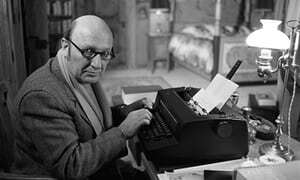
Until 2016, despite writing more than 300 novels and selling more than 200 million books in France, Frédéric Dard’s books were not available in English translations. This is unlike the speedy translation of young French author Leila Slimani’s novels.
In 2016, the Vertigo crime imprint of Pushkin Press published “Bird in a Cage” and followed it with ”The Wicked Go to Hell,” and “Crush.” These are the first major publications of Dard’s psychological thrillers in the “novels of the night” or noir category.
Why Dard May Have Been Ignored Before
The books’ editor, Daniel Seton, said in an article in The Guardian that publishers may have thought Dard’s invented slang was untranslatable. But his noir novels are beautifully written and do not use that slang heavily.
As a fan, Seton is very happy to bring Dard to an English-speaking audience. He also thinks publication comes at an appropriate time because the market is publishing more psychological thrillers.
A Penchant for Pseudonyms and Style Similar to Georges Simenon
Seton describes Dard’s style as being similar to that of Georges Simenon. Unlike Simenon, many of Dard’s books were written under 17 aliases, including the name of San Antonio, his Parisian secret police superintendent character. No one knows why he wrote under pseudonyms or how many there were. Only 17 are confirmed, so far.
Although Simenon preferred a third-person narrator, Dard preferred tales seen through the eyes of the protagonist or the villain. Both preferred gritty, unremarkable settings. David Bellos, a Princeton professor of French and another Dard fan, translated “Bird in a Cage.” Bellos told Boyd Tonkin in an article published by The Economist’s 1843 magazine that Dard and Simenon use language with “extraordinary efficiency.” The reader reads their fast-paced novels quickly.
Imperfect Protagonists and Cinematic Plots
Dard’s protagonists tend to be flawed characters; the prolific writer who also composed screenplays and scripts wrote plots that would be easy to use in films. If the Dard books sell well, the San Antonio character alone can provide aficionados with plenty of material as there are 173 books about his adventures.
Born near Lyon, Dard preferred writing in the settings of nondescript semi-industrial small towns. The industrial landscape is more native to his Belgian- born mentor, who was born in the city of Liege. The San Antonio novels offer filmmakers plenty of material.
Writers who want to try their hand at noir crime fiction should check out why Dard has devoted fans. Reading is an essential part of the making of a writer, so aspiring authors should take advantage of a revealing glimpse of a master.
- Published in Writing & Editing Resources
The Syrian Refugee Crisis Inspired Afghan-American Writer Khaled Hosseini’s Novel, “Sea Prayer”

Khaled Hosseini’s fourth and newest book is inspired by Alan Kurdi, the young child whose lifeless body was found on a Turkish beach. “Sea Prayer” is a short, illustrated book for readers of all ages and follows a virtual reality show of the same title that was scripted by Hosseini.
Acclaimed Novelist and UNHCR Goodwill Ambassador
Khaled Hosseini, a United Nations High Commissioner for Refugees (UNHCR) Goodwill Ambassador since 2006, will donate his earnings from this book to the UNHCR and his own charitable foundation, the Khaled Hosseini Foundation. “Sea Prayer” takes the form of a letter from a father to his sleeping son. Its press release quotes Hosseini’s statement that his book “is an attempt to pay tribute to the millions of families” that “have been splintered and forced from home by war and persecution.”
Hosseini himself is one of many who have fled their homes “in the midst of a displacement crisis of enormous proportions,” a crisis that is the source of inspiration for his latest creation.
From an Afghan Setting to Other Venues
When his debut novel, “The Kite Runner,” was published in 2003, Khaled Hosseini burst onto the literary scene as a distinctive voice bringing foreign characters to distant audiences. Hosseini writes powerful stories, and his new novel is at least as memorable as the others.
Hosseini followed “The Kite Runner” with “A Thousand Splendid Suns” and “And the Mountains Echoed.” Each of his first three novels had an Afghan character or storyline. This time the father of two writes from the perspective of a father and what Hosseini imagines he would feel in such circumstances.
Although he is a refugee, Hosseini was studying in Paris where his diplomat father was based when the Soviet invasion caused his father to seek asylum abroad. Consequently he had a more luxurious route than the harrowing journey Syrian refugees and other refugee victims of war experienced.
Nonetheless, just three years after the publication of “The Kite Runner,” its author became a Goodwill Ambassador for UNHCR, the UN’s refugee agency, revealing his commitment to the cause of refugees.
The “Sea Prayer” is a good book to read to your own children or to use to teach school children about the subject of refugees. For prospective children’s literature writers, it offers a fine example of addressing the subject for audiences of all ages. It is fortunate that a writer of this caliber is taking this message to a wide audience.
- Published in Writing & Editing Resources
Unconventional Astrid Lindgren Conceived Unconventional Pippi Longstocking
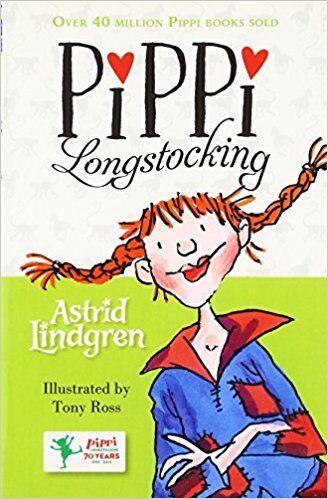
If you have never heard of Astrid Lindgren, you should correct that gap, especially if you aspire to be a children’s book author. To get started you may want to see “Becoming Astrid,” the recently made movie about the beloved children’s book author. If you visit Stockholm, include a trip to Junibacken, the children’s museum, which has a storybook train that takes visitors through some of her stories.
Lindgren’s Widespread Popularity
Astrid Lindgren’s books have been embraced by readers in more than 100 countries and have sold more than 144 million copies. Her books have been translated into 85 languages. She is best known for her Pippi Longstocking and Karlsson-on-the-Roof book series.
Pippi Longstocking, the Brothers Lionheart, Emil of Lönneberga, and Ronia the Robber’s Daughter are among Lindgren’s characters whose first rapt audience were her children and their friends. Her daughter imaginatively created “Pippi Longstocking” as a name and then asked her mother to tell her a story about this character.
The first book about Pippi was published in 1945. Pippi was a groundbreaking character because she was strong, smart, and more intelligent than adults.
An Unconventional Outlook Created Enduring Classics
As a 17-year-old in 1920, Lindgren applied for a trainee journalist position, an unusual career for a female at the time, confirming her reputation in her small town for being unconventional. She did not become an author until she was in her forties.
In the letter accompanying her original manuscript to the publisher, Astrid Lindgren described her first character, Pippi Longstocking, as “a small übermensch in the form of a child, living in a perfectly normal environment.” A Der Spiegel article about the author,
“Wartime Diaries Reveal the True Astrid Lindgren,” revealed this description.
Her personality, education, reading, children, and World War II all influenced Astrid Lindgren’s books for children. She was a prodigious reader. The Der Spiegel article mentions that Lindgren had said that “Hunger,” a novel by Knut Hamsun, was a source of her inspiration. Bertrand Russell, A.S. Neill, and Alfred Adler appear to have influenced her as well.
In her letter to the publisher she pointedly wrote:
“Bertrand Russell wrote that childhood is dominated by the desire to become an adult, or rather the will to power. According to Russell, a normal child dwells on fantasies that relate to the will to power. I don’t know if Bertrand Russell is right. Judging by the practically pathological popularity Pippi Longstocking has enjoyed over the course of two years among my own children and their friends of the same age, I am inclined to believe him.”
Before she started writing stories, she read many to her young children. Astrid Lindgren’s life and books reveal that becoming a children’s literature author can be inspired by many influences.
- Published in Writing & Editing Resources
Why Rust Belt Writers Should Consider Writing for Belt Magazine and Belt Publishing
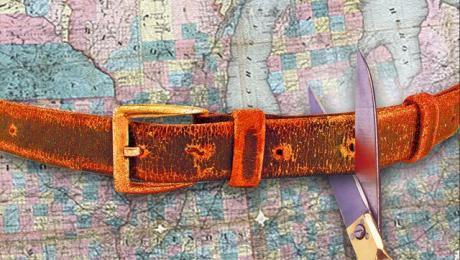
The term “rust belt” evokes an image of decay, but Belt Magazine and Belt Publishing want to show that there is much more to the region than the negative, oversimplified term used for the areas that have lost their former manufacturing strength or presence. The so-called Rust Belt includes successful areas like the Minneapolis-St. Paul region, as well as struggling cities in Ohio and in the Northeast.
Belt Magazine is an affiliate of Belt Publishing, which was founded in 2013 to provide a publication venue for writing about the Rust Belt and the Midwest for a regional and national audience. Both publications value quality and complex writing.
Belt Magazine aims to resuscitate long-form magazine journalism with essays and commentary articles by writers, poets, journalists and other professionals. Belt Publishing’s anthologies allow writers the opportunity to write about specific places that offer readers an opportunity to find stories, poetry, and perspectives that resonate with them.
As Belt Publishing states on its website about itself and its sister publication: “We believe in quality over quantity and community over analytics.” So far, most of the published material is about the Midwest.
About Belt Magazine and Belt Publishing
Anne Trubek, formerly Associate Professor of English at Oberlin College, is the founder of Belt Publishing and the weekly Belt Magazine, an online publication. Martha Bayne, the senior editor of Belt Publishing, is a Chicago-based freelance writer.
For more information about the book publisher and magazine read Chicago Tribune reporter Christopher Borrelli’s article, “’Rust Belt,” and City Lab’s article by Alastair Boone, “Stories from the Rust Belt, for the Rust Belt.”
No Shortage of Midwestern Talent
The Midwest boasts a wealth of talent, with some of the best Master of Fine Arts programs in the country at the University of Iowa, University of Michigan, and the University of Wisconsin These two publications welcome regional voices and provide the students and graduate of these programs with an opportunity to share their talent and specific Midwest experience with their readers.
Writers from the Rust Belt
Many of our well-known classic and current writers have Midwestern roots, and their prose used the Midwestern landscape as the background of their writings. Midwestern writers are as diverse as Sherwood Anderson, Charles Baxter, Saul Bellow, Willa Cather, Theodore Dreiser, Jack Driscoll, Stuart Dybek, Jaimy Gordon, Lisa Lenzo, Lorrie Moore, Joyce Carol Oates, Marilynne Robinson, George Saunders, and Richard Wright.
Writers from the Midwest should take advantage of Belt Magazine and Belt Publishing to showcase their craft and reveal their presence to a regional and national audience. Writers published by either or both outlets will reach beyond the niche of literary magazines, because these two publication sources have a more diverse audience than literary magazines.
- Published in Writing & Editing Resources
What 2018 Means for SEO and Content Writing

What 2018 Means for SEO and Content Writing
Writing for Search Engine Optimization (SEO) has a history as long as search engines themselves. Like everything, the defining points of SEO have changed as the internet and business needs have grown. It now has different criteria that allow some websites to be set apart more than others by ranking higher in search engine hits.
History vs Today
In the late 90s and early 2000s, keyword stuffing was an effective way to boost a website to the top. Today, the same is considered keyword spamming and will actually get a site ranked lower, if not removed from search results. When search engines were newer, they also weren’t great at sorting out the differences between keyword phrases like “beach rentals,” “rent beaches,” and “beach renting.” In other words, similar keywords that mean the same thing. Smarter search engines now ignore such duplication.
Along the lines of keyword spamming, this also happened within everything from tags, domain names, and subdomain names. (Think: “beachy-beach-rentals.com/beachrentals.”) Ridiculous looking, but it worked. Cloaking was another previously successful concept that meant showing one set of content to searchers and another set to search engines. Today, thankfully, names like these have mostly died out.
New SEO Standards Emerge for 2018
In 2018, the idea of “queries over quantity” takes center stage. The major search engines, including Google and Bing, grew infinitely smarter over the past 10 years. Their focus is now on actually resolving the user’s query rather than simply matching and displaying keyword-based results. SEO writers need to come up with ways to address this. It means eliminating keyword spam and placing the most powerful keywords for the topic in the first paragraph of the page and in H1 and H2 headers.
Another vital ingredient SEO writers should pay attention to is user engagement. Google specifically can track not only the search results people click on but also how long they stay on the page without hitting the back button and going into another result. Users who click on one result and interact further with that page indicate their query was solved. Google wants these pages to be first at bat because longer engagements mean more revenue for everyone involved.
Remember, while websites are created for users, the mechanics of writing and designing for search rankings often take away from the user’s experience. Focus on topics and let Google do the work for the website, but make the content relevant. Searching sites like Quora and Reddit, or paying attention to Google auto-suggest and “related searches” will keep content writers up to date on what users are looking for and help tailor the website to the searches.
- Published in Writing & Editing Resources
Jeanette Winter Writes True Stories about Foreign Countries and Difficult Subjects to Educate Young Readers
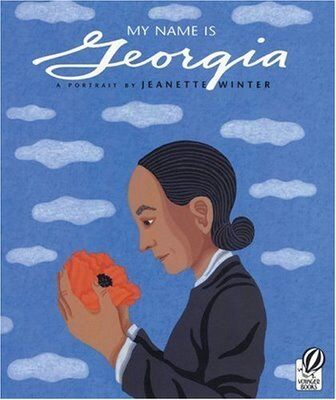
Many stories by award-winning author and illustrator, Jeanette Winter are about real-life people and events. She excels in writing about domestic and foreign subjects. Some stories like “Josefina” about Josefina Aguilar, the Mexican folk artist, introduce children to achievers in different cultures. Other books, like her biography of architect Zaha Hadid, “The World Is Not a Rectangle,” inspire children with the life story of an inspiring person.
Jeanette Winter’s stories about historic people and historic events provide young readers with information that helps them learn about history (national and foreign), become better in person, and more understanding of motivations of others. This is why she also tackles tough subjects. Parents can use her children’s books to discuss difficult subjects with their children.
Follow the Drinking Gourd—Book about Slavery
Follow the Drinking Gourd, introduces children to slavery with a story about how a folk song gave directions to slaves seeking freedom. The drinking gourd was a hollowed out gourd used as a water dipping tool.
The folksong, published in 1928 was used according to popular lore by an Underground Railroad operative who added coded instructions within it. These directions enabled fleeing slaves to head north by following the Pole Star, Polaris. The story introduces children to the importance of the Drinking Gourd song which later played a role in the Civil Rights, folk revival movements, and elementary school education.
The Librarian of Basra and Biblioburro – Books about Volunteer Public Service
“The Librarian of Basra” is the story of a woman who saved books during the Iraq War. She and her friends saved the book collection, some of which contained books that were centuries old.
“Biblioburro A True Story from Colombia,” tells the real life story of Luis Soriano who encourages reading by children in rural Colombia, with his for legged bookmobile.
A New Home and Affection for a Motherless Baby Hippo
“Mama: A True Story in Which a Baby Hippo Loses His Mama during a Tsunami, but Finds a New Home and a New Mama” shows children that losing a mother does not mean the end of having a loving mother. It also lets them know that a disaster, in this case a tsunami, can sweep victims away and cause devastating personal loss.
Jeanette Winters, opens the world for her readers, by showcasing contemporary people and activities, or by taking them back in time in un such books as “Klara’s New World,” about 19th century Swedish settlers in America, “Elsina’s Clouds” about a young South African girl who paints clouds, “Angelina’s Island” about a Jamaican immigrant in Manhattan. Short biographies about notable people reflect the general intent of the author to educate young readers.
- Published in Writing & Editing Resources
Easy Ebook Formatting
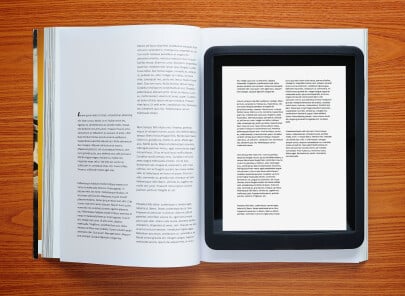
Unless authors are paying for specific services through their ebook publisher, including editing, formatting, and file conversion, they will need to take steps to ensure their book reaches readers in a clean, readable format. Bearing in mind that ePub is the most common format used with the Kindle and other reading devices and applications, these steps will save authors the headache of finding functional errors in their finished product.
Things to Avoid
Avoid letting typos through! It should go without saying, but book ratings dip when there are grammatical and spelling errors present. Remember once an ebook is converted to ePub format, corrections cannot be made. Also, remember e-reader devices have a limited number of font choices. Avoid using fancy fonts which may not translate into the finished ebook. Instead, Times New Roman and Courier are two of the better choices. If the reader wants, they can then change the font based on what their device allows.
Tabs and additional spaces are a major problem when converting material to ePub. Authors need to go through the entire document to ensure it is “clean” before sending to the e-publisher. These steps will make it easy:
- Enable “formatting marks” or “non-printing characters” in the word processor.
- Physically remove ALL tabs, double spaces, and extra paragraph breaks.
- Use the “Indent First Line” feature under the Format menu for indented paragraphs.
- Use a page break at the end of each chapter instead of multiple carriage returns.
If the book includes images, they should be resized to a maximum of 300 pixels high if they will be included with the text. If the images will be full-page, they should be resized to a maximum of 1,000 pixels in height by 700 pixels in width. Remember the accepted formats are .JPG, .PNG, and .TIF. Also, never wrap text around an image. Keep the image set in-line with text by right-clicking the photo in the document and confirming its lineup.
Remember also to never refer to page numbers in the document, as page numbers will be different on every device and every app. Instead, create a Table of Contents (TOC) at the beginning of the document and link each reference to its corresponding page by using the menus, “Insert / Reference / Index and Tables,” then “Insert Table of Contents.” Mark the text to be included (for example, Header 1 styles), and attach each reference to each TOC entry. Easy-to-follow guides for doing this are readily available on YouTube.
One last tip is to use Times New Roman if the text will include any special characters or symbols. This font is the easiest to convert for ePub, whereas if other fonts are used, they may come across as simply a blank box. Better yet, avoid using special characters if possible.
By following these simple tips, writers will ensure their ebook is a high-quality item for their readers. They will also save money over hiring formatting companies whose charges generally start around $50 for what involves only a few minutes of work.
- Published in Writing & Editing Resources
Putting Grief into Words

Grief involves a broad range of emotions that can be difficult to sort out. Putting them on paper not only helps sort out those feelings, but also helps a writer connect with their audience in a real, raw way that other writing cannot accomplish. There are several ways to approach writing about grief, and each writer who is going through something profound in their life will know what works best for their situation and the way they need to process their feelings.
Pure Non-Fiction
The most straightforward way to approach grief in writing is to get the facts and feelings down in neat, chronological order. The grieving writer may begin by writing down the events leading up to what happened, followed by the pinnacle of the occurrence. This will be the hardest part of such writing as it will likely cause the original feelings to surface. Once through the bare bones of the story, the writing can take a turn into exploring all the feelings the event prompted: disbelief, anger, and sadness.
This type of structure will help the writer experiencing the grief look at each emotion from the point of view of its source. This can be fleshed out further by describing the physical effects these feelings had on the sufferer (headaches, sleeplessness, weight loss) and on those family and friends who were there to deal with the fallout.
Creative Non-Fiction
Softening the story can help the writer connect with a wider audience without losing the depth of the story. One way to do this is to spend more words painting pictures of the people involved, turning them into characters rather than simply “subjects.” Creative non-fiction makes a true story more readable as it focuses not only on the event that happened but on the lives of the people affected. Here, the writer will also take care to convey a well-described setting for each portion of their story.
Truth-Based Fiction
When turning true stories into fiction, it is vital to consult with the people involved to determine how much discretion they want when their place in the story is written. Names, times, and places will have to be changed, and some may have to be omitted. This also gives the writer the freedom to craft other emotional scenarios which, in many cases, can help them approach their own grief in a different, healthier way. This can be the catalyst to moving forward in real life.
By turning a life-changing event into a fictional story, a grief-stricken writer can detach themselves slightly from the feelings that cause them the most pain and focus on telling a story to which many people can relate. Most of us have lost someone close to us, whether through death, divorce, or other life events.
No matter which way works best for the individual writer, writing through grief becomes an effective part of the healing process. As a writer explores their feelings through each portion of their story, the writing process itself will help them explore and accept what they are going through and will provide a starting point for their next steps in healing.
- Published in Writing & Editing Resources