Why Alan Moore Became a Trend-Setting Graphic Novelist
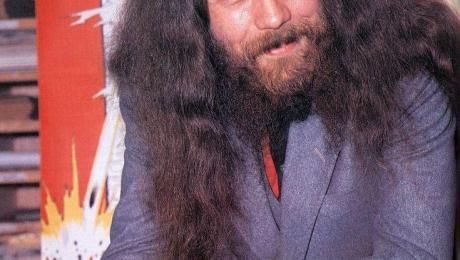
British writer Alan Moore is one of the most prolific and critically acclaimed writers of the graphic novel genre. His groundbreaking novels include the super hero series, “Watchmen,” and historical horror story, “From Hell.”
Meant for a Mature Audience
Alan Moore’s stories are usually set in a dystopian environment and can contain political critiques. “Watchmen” comprised a series of 12 books that earned a place on Time magazine’s list of 100 greatest novels. He is the source for the Guy Fawkes mask that has become a protest symbol and was worn by his character in the “V for Vendetta” book series. This series, originally published in 1982, depicted a masked vigilante crusading against a fascist British government and a complicit British media.
In “Watchmen,” Moore used super heroes (a comic industry staple) and presented them as being less heroic and more fallible with human-like traits. His 1980s books inspired the comic book industry to target adults, as his creations revealed that there was money to be made from adult consumers.
Horror and Moore
Moore has masterfully used horror-master H.P. Lovecraft’s use of a creeping sense of dread in his own distinctive style. He mischievously uses horror to make readers face taboos in this genre, so his contributions are even more unsettling.
His horror book series, “Providence,” is praised as a masterpiece and as the “Watchmen” of the horror genre. This series also contains references to Lovecraft’s life and work.
Not Afraid of Taboos
Moore’s use of the graphic novel medium forces readers to face what makes them uncomfortable, including taboos. From his initial foray in the horror genre with the “Swamp Thing,” Moore has revealed that he ignores taboos.
He artfully uses myths, legends, and mysteries to create stories that are mature, complex, and dark. The “Neonomicon” contains an inhuman character among a human cast of characters. “From Hell” uses the mystery surrounding the identity of the serial killer Jack the Ripper.
The Fourth Dimension and Moore
Moore has also been praised for using the cubist and futurist tendencies of the medium to explore how space and time can be presented in the fourth dimension. The fourth dimension stretches the relationship between the space and time continuum and complements Moore’s talent for creating stories within stories to immerse readers in his tales.
Moore skillfully uses the fourth dimension to create multiple dimensions—fitting for someone who wants to “blur the lines between what’s real and what’s made up,” (as revealed in a Guardian newspaper article).
The graphic novel genre makes his stories more memorable because of its powerful mix of text and art. Whether his books are set in the past or the future, Moore leaves an indelible impression on readers who keep coming back for more.
- Published in Writing & Editing Resources
Kent Haruf, A Writer Whose Commitment Was Ultimately Rewarded
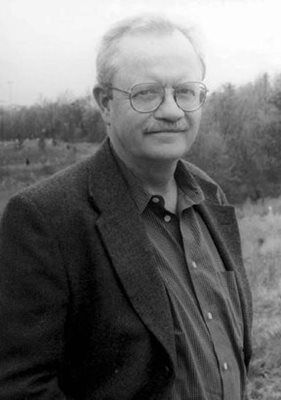
The Colorado-born writer Kent Haruf wrote novels of small town life with an understated flair. He was struck by the writing bug in college but spent decades in obscurity honing his craft before he became a successful published author in his forties.
Determination and Self-Belief Paid Dividends
Kent Haruf’s commitment to writing was demonstrated by his application to attend the Iowa Writers’ Workshop, as described in his article in the literary magazine Granta, “The Making of a Writer.” He did not give up after his first application was rejected by the Workshop. The second time he applied, he was so determined to be accepted that he moved his family to be near the Workshop before receiving an acceptance.
He obtained a job working as a janitor in a nearby nursing home, while he plied the Workshop with stories to add to his application. This time he was accepted by the Workshop, where his experiences made him confident that he had writing talent. That was sufficient incentive to continue writing, and the Workshop provided him with useful connections.
By the end of his fellowship, he had begun to locate his stories in Holt, Colorado. However, he worked as a teacher for more than 11 years while continuing to write. When he felt ready, he approached John Irving, a writer he had met at the Workshop. Irving recommended him to his agent, who accepted Haruf as a client.
Time-Improved Writing
Perhaps it was because of his diligence that his British publisher praised his “beautifully restrained” work, according to The Guardian newspaper. His writing style complemented the stripped-down reality he described in his interview with John Moore of the Denver Center. It takes time and skill to write restrained prose that touches readers’ hearts.
Spare Prose Complementing the Colorado Setting
Haruf’s favored location was the eastern plains of Colorado where he grew up. He spent the first 12 years of his life in three towns where his experiences left a lasting impression that is reflected in his writing and the chosen setting for his work. The culture of the region provided the background for the creations of his imagination and the spare yet rich interior lives of his characters.
The quiet beauty of his work reflected the spare beauty of this flat part of the state and the dry terrain which was tough on the economic prospects of its inhabitants. As a teacher, Kent Haruf pointed out to his students the importance of hard work in refining natural talent; he was living proof of that message.
- Published in Writing & Editing Resources
The Case for the Long-Contended Serial Comma
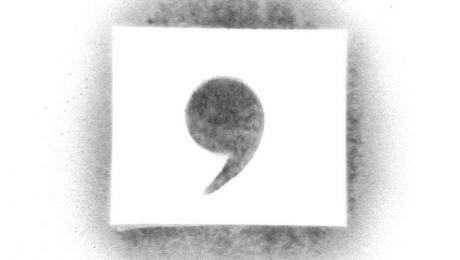
Few times in the history of the written word has such a small character caused so much contention as the serial comma. Also known as the Oxford comma (after the dictionary by the same name) and the Harvard comma (after the school, of course), this punctuation mark divides more than words. It has the uncanny ability to divide authors and editors into one of two camps: for or against.
Among those who support the use of the serial comma are the Chicago Manual of Style and William Strunk Jr. and E. B. White, authors of another well-known writing style guide, “The Elements of Style.” In this guide, the author is directed to use the serial comma “in a series of three or more terms with a single conjunction.” For example, “He opened the package, reviewed the contents, then abruptly tossed it aside.” Or, “Her skirt was a conglomeration of red, orange, and blue fabric scraps.”
Avid haters of the serial comma include the Associated Press (AP) and publications such as People, Variety, and The National Enquirer. AP prescribes that the serial comma should be omitted in all cases except when doing so would cause misreading. This is in direct opposition to the Chicago Manual of Style which states serial commas should always be used, except in the same circumstance. If this isn’t confusing enough, writers for Variety must accept that the publication basically sticks to its own unwritten grammar rules.
The Comma in Court
In March of 2017, the serial comma had its day in court. Dairy delivery drivers for Oakhurst Dairy, a company in Maine, sued their employer regarding overtime pay and who was qualified to receive it. The U.S. Court of Appeals determined on March 13 that the way Maine’s employment laws were written, the law was unclear and “ambiguous,” leaving too much room for misinterpretation. The problem of clarity came down to one missing comma!
In the end, the five drivers involved won their appeal, and the court ruled they were eligible for overtime benefits. Maine does have its own style guide for legislation which instructs law-writers to omit the serial comma. This could be revisited, however, as the drivers’ overtime case continues moving forward.
Which Way to Sway?
As a writer or an editor, the best tool you have in your box is communication. Writers want their work to stand apart in clarity, and an editor or publisher may have different criteria for the piece than the writer is accustomed to. Always clarify which style the end publication prefers, and it will make both of your jobs easier. Afterward, you can celebrate a little if your side of the comma conundrum has won the battle.
- Published in Writing & Editing Resources
The Mystery of Elena Ferrante

In 2016, Claudio Gatti, an Italian journalist, conducted an investigation and proclaimed the identity of the author who chose to write under the pseudonym Elena Ferrante. Gatti unmasked his quarry in his blog article aptly titled, “Elena Ferrante: An Answer?” published in The New York Review of Books.
Gatti’s evidence appeared to be believable enough for some to accept that the identified person was the real author behind the persona of Elena Ferrante. There followed consternation and controversy about whether a writer who preferred to maintain her anonymity should be “unmasked” against her will. Gatti’s claim was not acknowledged by the identified person.
An Exciting Writer Who Prefers to Remain Private
The writer who has chosen the pen name “Elena Ferrante” as her persona became famous outside Italy with the release of her works in other languages. Her novels about friendship and the life of two women growing up in Naples are especially beloved already. However, despite the fact that the translation of her novels, “Troubling Love,” “The Days of Abandonment,” “The Lost Daughter,” and the Neapolitan Novels has catapulted her into the big leagues, the writer has stubbornly preferred her anonymity.
She remains an enigma because despite her fame, she refuses to own the work that has won her adulation. Some have even wondered whether the anonymity is because “she” is actually a “he.” One thing appears clear: the author is without an ego.
JK Rowling’s Crime Novel Written under a Pseudonym
In contrast, JK Rowling wrote a crime novel under a pseudonym that became a roaring best seller after she was identified as the author. Yet Elena Ferrante‘s work soared in popularity without her identity being known.
However, since her novels seem intensely personal; maybe it is just as well that the author remains in the shadows. Who knows what personal dramas would ensue if she came forward to own her work? But one can wonder how in an age when it is so hard to get published the writer “Elena Ferrante” was able to. Was she already known to the publisher, as Gatti appears to indicate?
Several well-known authors have written anonymously. For instance, Louisa May Alcott, Jane Austen, the Bronte sisters, Charles Dickens, and Leo Tolstoy began their careers publishing anonymously. It is likely that like them, the author writing as Elena Ferrante will also unmask herself when she is ready. As her secret has not gotten in the way of readers enjoying her work, why does it matter whether the public knows who the author is?
- Published in Writing & Editing Resources
Eudora Welty, Writer and Photographer, Shaped by Depression-Era Experiences and Her Native Mississippi
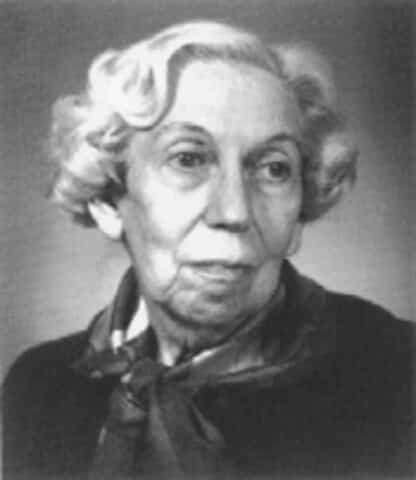
Eudora Welty inherited her love of literature from her mother and her love of photography from her father, who helped establish the first camera store in her home town of Jackson, Mississippi. Her mother, as related in the author’s memoir, even endangered her life during a house fire to save a collection of novels by Dickens.
Photographer and Writer of the Southern Experience
Before she became a published author, Welty held a one-woman show of her photographs that revealed her empathy for the kind of people that would become the subjects of her written works. During a period when African-Americans were not recognized, many of the subjects of her photography were African-Americans going about their daily lives.
Hired as a publicity agent in the 1930s for the Work Progress Administration, Welty traveled through rural Mississippi. She photographed and wrote press releases about the countryside and the condition of the people during the Depression. The creative writer saw up-close the small-town southern life that she wrote about in her stories.
The Writer Emerges in 1936
With the debut of the short story, “The Death of the Traveling Salesman,” in 1936, Welty displayed her original style of writing. A gardener and photographer, Welty captured transitory moments artfully in her writing. She wrote about a familiar world in the familiar surroundings of her family home, to which she returned after her father’s untimely death from cancer.
By 1941, Welty’s first collection of stories, “A Curtain of Green,” was published, and by 1955 she had composed most of the works upon which her reputation as one of America’s great writers rests. Writers today can learn from her observant details and sensitivity; the art of writing came naturally to Welty because of her passion for photography and her love of English language and literature.
In her prose, words describe scenes with the precision of a photographer’s eye for clarity and detail. Her gift for “verbal portraiture” as described by Danny Heitman in his article, “The Quiet Greatness of Eudora Welty,” is clearly evident to readers of any of her works.
Some critics have seen her only as a regionalist, depicting southern life of a certain period. Despite past criticism of how Welty handled racism, Harriet Pollock reveals the sensitivity with which Welty approached race and racism in her “Eudora Welty, Whiteness, and Race,” published by University of Georgia Press.
A great writer is a great teacher of how to write memorably for all who follow, and Eudora Welty is no exception. Her passion for photography informed the beauty and richness of her prose. She is a joy to read in any era.
- Published in Writing & Editing Resources
Why the Nobel Committee Recognized Tagore and Dylan for the Literary Worth of Their Song Lyrics
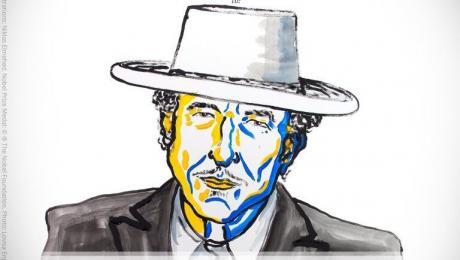
Surprise was the most common reaction when the 1913 and 2016 Nobel Prizes were awarded for literature. In 1913, a virtual unknown outside India, and in 2016, a world-famous celebrated songwriter, elicited the same reaction. Why?
Rabindranath Tagore was recognized for his first work translated in English: a songbook aptly titled “Geetanjali.” Then in 2016, Bob Dylan was himself surprised when he was awarded the Nobel Prize for Literature.
Coincidentally, the Nobel Committee’s selection — which was both praised and criticized — for the literature laureate in 2016 came just over a century after Tagore became the first laureate recognized for verse meant to accompany music. Tagore was the first non-western Nobel laureate; he did not expect to win even though he was already a recognized and beloved poet in his native land.
Anthems for Movements and Nations
What both Tagore and Dylan have in common is how they have moved people in their eras and afterwards. Dylan’s lyrics have been the figurative anthems for the civil rights and anti-war movements in the United States; Tagore’s poetry provided the lyrics for three national anthems.
Because the Nobel was established by an armament manufacturer, writer Will Self, while agreeing about the literary value of Dylan’s work, suggested that he should follow Jean Paul Sartre’s example and reject his award.
Both Laureates Were Surprised for Different Reasons
Dylan did not know that he was being considered for the prize, but Tagore had been informed by a friend that Thomas Sturge Moore had recommended him to the Nobel Committee. Even though “Geetanjali” was a book of lyrics, Moore felt its poetry merited consideration of Tagore as a literary genius worthy of recognition.
Tagore was already known at home for being a literary great. Dylan is also being presented in literature classes taught by his fans as a literary talent. Dylan’s biographers, Dr. David Gaines and Howard Sounes, agree that he was a worthy choice.
Tagore, a poet, consciously wrote lyrics. But in Dylan’s case, he was not consciously writing poetry, even though in his lyrics he has evoked literary masters.
Unlike Tagore, Bob Dylan was not recognized for a particular work but for a body of work. In a career spanning more than 50 years, Dylan has crafted more than 700 songs. Tagore, who lived to a ripe old age, composed more than 2000 songs. So, Dylan has a ways to go before his productivity exceeds that of the lyricist who preceded him into the annals of Nobel laureates.
- Published in Writing & Editing Resources
Avoiding Self-Publishing Traps
Self-publishing has exploded in popularity largely due to companies like Smashwords, Lulu, and BookSurge. These places make it relatively easy for a new or unknown novelist to get their book on the market and available for print purchase or ebook download. Because these markets are so easy to use, they market their services to authors who may not be familiar with the guidelines that must be followed prior to reaching the finished product.
The Editing and Proofing Trap
By the time you finish your initial manuscript, your book will be deeply familiar to you. You’ve done the research and spent hours seeking just the right words and putting them in the right order. It’s been a labor of love. This is precisely what makes editing and proofreading your own manuscript so difficult. By the time you are done writing it, you have become blind to all its imperfections, and there is no way editing it will be accurate.
Outside eyes are vital in editing and proofing your work because this is what your readers will experience. First, have someone look at it from a content point of view. Does the story flow well? Next, have a seasoned editor red-pen your manuscript for technical errors. Finally, have someone read the completed work as a backup to ensure everything is perfect before going to print.
Your Book Will Be Judged by its Cover
Unless you are an experienced professional at cover design and book layout, it is best to seek assistance for this stage. Start by doing some research into book cover graphics. The easiest place to start is in your local bookstore. What are the best-selling books using as their cover designs? What is the quality of the cover photos or graphics? What types of fonts are they using? Also pay attention to the book spines and back covers for ideas on layout and content.
Printing and Distribution
While marketing a book generally falls on the author’s shoulders, printing and distribution are the biggest concern for financial reasons. Beware of companies that require you to pay for a number of copies upfront because you will be left with a storehouse of books to unload on your own. Print-on-demand services are the way to go, as the books are only printed as they are purchased. You will also get to see what the finished copy will look like before you start marketing it.
As self-publishing becomes the preferred way for new authors to get their names on the market, keep an eye out for traps by always reading the fine print in the terms of service for the company you use. Doing the requisite research into self-publishing companies will save you time and possibly thousands of dollars.
- Published in Writing & Editing Resources
British Literature Has Become Less Emotional than American Literature over the Past Century

A comparative study of British and American literature revealed that British literature has become less emotional than American literature. This startling fact was revealed by the study published in 2013 in the journal, “Public Library of Science ONE” (“PLOS ONE”). In this study, Dr. Alberto Acerbi and Professor Alex Bentley evaluated more than five million books using Google’s database, Ngram Viewer, to reveal the frequency of words associated with anger, fear, disgust, sadness, joy, and surprise in these books.
Stressful Events and Emotional Literature
Dr. Acerbi and his colleague noted that the use of language is tied to major events. For instance, during World War II there was greater use of words associated with sadness. Since the mid-1950s American authors have noticeably used more expressive words.
The emotional prose by writers such as E.M. Forster was replaced by the reserved style of authors including Ian McEwan. From the 1960s onwards, the divergence between the American and British prose and the change in the language used by British writers was more evident.
The study provides a useful starting point to understand the reasons for this divergence. Psychologists have discovered that people who have more emotional intensity live more complicated lives than less emotional people. This may explain why the apparent connection between emotion in literature and turbulent events.
A noticeable albeit unsurprising exception during the Cold War era was the use of words associated with fear, even though British writers used less emotionally expressive words generally. Words associated with fear became more common in the novels written during the second part of the 20th century.
More Turbulent Times in America
The researchers appeared to think that economic prosperity in America made the prose more emotional; yet in the British context they held the contradictory view that turbulent times affected the writing of the period.
While the American economy did go through a post-war boom, American writers were also living through turbulent times. The civil rights movement, the assassinations of American icons (John F. Kennedy, Robert Kennedy, Dr. Martin Luther King, Jr.), the anti-Vietnam War movement, and feminism era were some of the notable emotional periods of the 1960s, the decade of the emerging divergence in the writing styles of the two nations.
In the U.S. were also greater inequality, a weaker social net and activists raising public awareness of the weaknesses. Writers like Alice Walker, Harper Lee, Toni Morrison, James Baldwin, Gore Vidal, Joseph Heller, and Norman Mailer were products of their times. The literary moods expressed in their writings were driven by the major events of the 20th century experienced in their country.
The comparative study of British and American books reveals that writers are communicators who are moved by their times. The storytellers are not immune to what is going on around them. They distill cultural and historical trends of their times in the language they use in their literary works.
- Published in Writing & Editing Resources
The Value of Ethnic and Post-Civil War Literature from Sri Lanka

Literature can stoke the feelings that lead to civil war, express what writers think about the conflict, and help heal the wounds of war. When Abraham Lincoln met Harriet Beecher Stowe, he told the author of “Uncle Tom’s Cabin” that she sparked the Civil War. By dramatizing slavery’s horrors, her book moved the conscience of Northerners and energized the cause of abolitionists.
Understanding Sri Lanka’s Civil War through Ethnic Literature
In our time, the literature of Sri Lanka reveals to outsiders the trauma of civil war, and how important it is to heal its wounds to bind a nation afterwards. The protracted civil war in Sri Lanka that lasted almost 25 years until its conclusion in 2009 still haunts its people.
Colleen Lutz Clemens, associate professor of non-Western literatures at Kutztown University, published a blog article recently entitled, “Sri Lankan History and Literature Deserve a Place in Our Classrooms.” Published on October 12, 2016 for “World Literature Today,” her piece explained why literature provides a window into the process of healing a nation through the remembrance of a traumatizing period in history.
The literature and poetry reflecting feelings from both sides of the conflict reveals the different viewpoints of people before the war, during the war, and in its aftermath.
Literature Revealing Rising Tensions
Democracy paved the way for civil war in Sri Lanka when political parties mobilized voters along ethnic lines. Government led by politicians representing the majority-Buddhist Sinhala population introduced policies that discriminated against the (mostly Hindu) Tamils and fueled the tensions.
The first signs of conflict were ethnic riots that sprang up in 1958 after the polarizing Sinhala Only Official Language Bill was approved by Parliament soon after the 1956 general election. This law paved the way for the rise of militancy that culminated in civil war. Writers on either side of the ethnic divide reflected the passions of each faction.
Literature Promoting National Unity
However, among writers from the majority ethnic population were also those who expressed their support for reconciliation and respect for minority rights. During the 1960s and 1970s, the Sri Lanka Progressive Writers’ Association promoted socialism in Tamil literature and expressed support for ethnic integration, national unity, and social equity.
During this period, progressive writers highlighted social issues such as caste oppression, class conflict, and economic exploitation. During the civil war, writers on both sides in favor of unity expressed their feelings through their writing. The post-war literature has revealed what is needed to bring a nation together after a war in which each side viewed the other as its bitter enemy.
- Published in Writing & Editing Resources
Don Quixote—a Pioneering Novel with a Still-Inspiring Hero
2016 marked the 400th anniversary of the death of Miguel de Cervantes. His great novel, “Don Quixote,” was published in 1605 and was partly written while the author was in prison. Since then, it has earned admiration from other great writers. The Bokklubben World Library, a poll of writers in 54 countries conducted by the Norwegian Book Club in 2002, selected “Don Quixote” as the greatest literary work.
Cervantes had an eventful life. He was injured in the battle of Lepanto in 1571, captured by Barbary pirates, and enslaved for five years in Algiers by the Ottomans. After he was freed, Cervantes became a playwright and a tax collector and was briefly imprisoned because of irregularities in his work as the latter. It was during this stint in prison that he began to write “Don Quixote.”
A Revolutionary Work of Literature
Not only was this book one of the first fictional works, it contained many special features. As the story was seen through the viewpoints of different characters, the writer’s vision can be seen for the first time in this book. This revolutionary literary structure for its time also depicted chivalry in a sardonic manner—another unusual aspect of the novel.
Harold Bloom, the literary critic, and others consider this 17th century novel to be the first modern novel. According to Bloom, the arcs of change mark the novel’s separation from the past; while for Carlos Fuentes, it is the characterization and dialogue that distinguish the novel from earlier works.
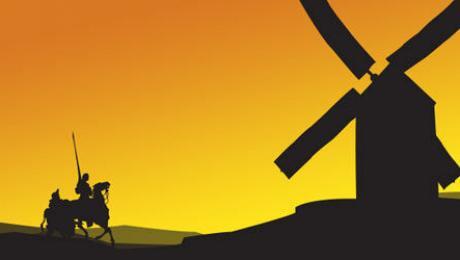
The title character, as described in a letter Feodor Dostoevsky wrote to his niece, was the “most perfect” literary hero. Both the author and his protagonist were idealists who had a tough time in their lives. Fighting windmills was symbolic of fighting for ideals even though loss was expected. Cervantes believed that standing up for ideals mattered more than achieving success.
Other Notable Facts
Parts of the story were taken from the author’s own life, such as the incident where the nobleman and his sidekick Sancho Panza free some galley slaves. During his period of enslavement, Cervantes tried to escape several times. His wife’s great uncle was the source for the nobleman’s characterization and the protagonist’s revealed real name, Alonso Quixano.
The book was written in a modern variant of Spanish, and its popularity mainstreamed this new development.
“Don Quixote” still earns praise, even from a business professor! In his film, “Passion and Discipline: Don Quixote’s Lessons for Leadership,” former Stanford professor and poet James G. March uses the hero to distill parts of his famous “Organizational Leadership” course.
- Published in Writing & Editing Resources