
Advice about Screen Writing from the Great Writer-Director Billy Wilder
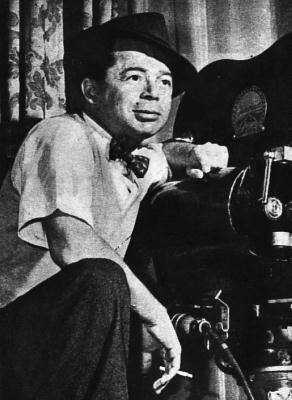
Samuel “Billy” Wilder was born in Vienna, Austria in 1906 and moved to Germany for work. Before he became a screenwriter and director, he was a reporter and drama critic. He subsequently left journalism and became a prolific writer for the German film industry.
From the German Film Industry to Hollywood
Wilder, who was Jewish, came to the U.S. after fleeing Germany to escape the Nazis. He was fortunate to arrive at a time when the studios allowed screenwriters to direct movies made from their scripts. He co-wrote several films with Charles Brackett, including Ninotchka and Ball of Fire.
Wilder’s career as a contract writer with Paramount began four years after his arrival with the film Bluebeard’s Eighth Wife (his first movie for Paramount). The movie studio head at the time was German–born filmmaker Ernst Lubitsch, who had directed Wilder’s script for Ninotchka.
Wilder’s work covered a wide range as revealed by his films Ace in the Hole, The Apartment, Double Indemnity, The Lost Weekend, Sabrina, Some Like it Hot, Stalag 17, and Sunset Boulevard.
Billy Wilder’s Screenwriting Tips
When he was interviewed by James Linville for The Paris Review, Wilder said, “Sometimes when you finish a picture you just don’t know whether it’s good or bad.” Nevertheless, in Conversations with Wilder by the screenwriter Cameron Crowe, Wilder shared his screenwriting tips, among them:
- Remember that the audience is fickle.
- Know where you are going with the plot.
- Grab the audience by the throat from the beginning, and do not let up until the end.
- Allow the audience to add up two plus two to win over the audience forever.
- Give the main character a clean line of action.
- A good screenwriter capably hides the plot points.
- Add to what the audience is seeing in the voice-overs, not what is being seen.
- The end of the movie is triggered by the event occurring at the end of the second act.
- The third act builds the action and tempo until the final event.
- If there is a problem in the third act, the root is in the first act.
- Do not leave the audience hanging at the end.
One of Hollywood’s great writer-directors, Wilder maintained that writing gave the movie its direction. He preferred to write with a partner and co-wrote each one of his twenty-four films. He began writing with a partner because of his limited English but continued it because he liked it.
- Published in Writing & Editing Jobs, Writing & Editing Resources
Why Raymond Chandler Still Resonates with Mystery Fans—Aspiring Writers Take Note
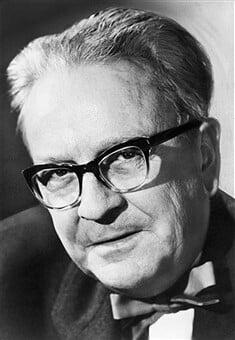
Raymond Chandler introduced a new kind of detective hero in The Big Sleep, his debut novel published in 1939. Philip Marlowe was a regular guy who was smart, witty, and often spoke directly to the reader. Unlike Humphrey Bogart’s portrayal of him in the movie, Chandler’s creation was funny and literary. Perhaps his literary bent was influenced by Chicago-born Chandler’s early life in England. He wrote poems and reviews in England before leaving for America.
Realism in Fiction
Before he started writing books, Raymond Chandler wrote stories in pulp fiction magazines and developed his writing style before his foray into books and screenplays.
In his 1950 essay The Simple Art of Murder, Chandler wrote that the old novels that appeared stilted in his time were realistic for people of the day. However, crime novels of the past and present were too often not realistic. Chandler was not a fan of most of the crime fiction that was favored by mainstream publishers in his time.
At the time Chandler entered the detective story genre, the genre was dominated by the English formula, which did not impress him although he complimented it for its “more sense of background” details. But he said that these novels were “too contrived, and too little aware of what goes on in the world.” The English-style writers of detective fiction loved by the publishers didn’t write about the “kind of murders that happen” nor “about the authentic flavor of life as it is lived.” Chandler wrote about such murders.
Despite that, according to confessed detective story addict W.H. Auden, Chandler’s books were “works of art.” Auden discussed Chandler and detective fiction in his article, The Guilty Vicarage, published by Harpers in May 1948. Chandler’s crime novels covered gritty subjects, and he had a keen eye for details himself which, according to Judith Freeman who wrote a book about him, gave them their authenticity.
Plots Should Stand Up to Scrutiny
Chandler valued books that did not have implausible, unrealistic storylines. In The Simple Art of Murder, his takedown essay of a praised work by A.A. Milne, The Red House Mystery, Chandler reveals what is wrong with the crime novel.
Aspiring writers can take heart that Chandler acknowledged that when it comes to plotting, “(e)very detective story writer makes mistakes.” He himself failed to identify the killer of the gardener in The Big Sleep. But mystery fans continue to like Chandler because his “story is his adventure in search of a hidden truth,’ with a hero “fit for adventure.”
Chandler revolutionized crime writing and influenced generations of crime fiction novelists after him. Read The Simple Art of Murder to learn more about his likes and dislikes.
- Published in Writing & Editing Resources
Key Differences in Copywriting for B2B and B2C Markets

Knowing your target audience is a vital element of successful copywriting. This affects the information contained in the messaging, its tone and voice, and the type of marketing materials used to target the different types of potential customers. Selling to business-to-business (B2B) and business-to-consumer (B2C) target markets takes their differences into account.
Differences between the B2B and B2C Target Audiences
Potential B2B customers expect some industry terminology and understanding of the specific industry being targeted. They feel comfortable with material that reveals familiarity with their language and industry.
Being technical will not lose potential customers; technical information helps distinguish the product or service being offered from comparable products in the market. It also helps the purchasing customer persuade superiors about the value of the product or service being offered. Copywriters should check to see how comparable products and services are being marketed.
The B2C audience includes a diverse range of potential customers, who are more or less knowledgeable about the product or services being marketed. The marketing material should accommodate the diversity of potential customers in this market. Typical language should be easy to understand by readers with an 8th or 9th grade reading level. The National Adult Literacy Surveys in 1992 and 2003 revealed that average adults read at 9th grade level. The 2013 data revealed little change from 2003.
The B2B and B2C Target Audience Viewpoints
B2B marketers and copywriters should take into account that potential buyers are on a budget. The marketing of products and services should present how beneficial (compared to competitive products/services) and cost effective they are.
Unlike B2C customers, B2B readers are not impulsive buyers. They want to have good reasoning to support their purchase decision because they may be answerable to superiors. A copywriter for a client serving the B2B market needs to provide copy that clients believe will reflect well on them with their employers. The marketing material should answer as many potential questions as possible to make it easier for purchasers to justify their choice.
Potential B2C marketing customers make their own decisions and are not answerable to others. However, they also want to get value and have budgetary limits. Marketers understand that customers can make emotional decisions. Even with a discretionary product or service, marketing material aims to persuade potential customers they need or would benefit from what is being offered.
However, despite the general differences, B2B and B2C marketing approaches do have something in common. In both contexts, it is individuals who make the decisions. Copywriters need to write copy that appeals to potential individual consumers in either the B2B or B2C markets.
- Published in Writing & Editing Resources
New IAPWE Blog is Now Live
The IAPWE is excited to announce that our new blog is now live. The IAPWE Blog will serve as an additional home for news and updates relating to both the IAPWE as well as other local organizations that are helping to support writers and editors in their communities.
We will continue posting content on the blog on this site as well, however, for more frequent updates and information on local events throughout the world, you will want to check out our new IAPWE Blog.
- Published in Writing & Editing Resources
The Growing B2B Writing Market Offers Opportunities for Freelance Writers

Fifty-four percent of B2B marketers and fifty percent of B2C marketers identified content production as their greatest challenge in the 2015 annual report of the Content Marketing Institute (CMI). This is good news for capable content writers looking for business in this market.
Why You Should Check Out the B2B Writing Market
With rates of $1 per word or more, the B2B writing market is worth checking out due to the growing appetite of businesses for increased content. CMI’s Benchmarks, Budgets, and Trends survey for 2016 revealed that seventy-six percent of marketers intended to produce more content in 2016 than they did in 2015. Fifty-one percent intended to boost their budgets, and for sixty percent content production remained their top challenge.
This indicates a booming market for writers who are skilled in writing content to sell services and/or products to other businesses and to write engaging copy about business problems.
Understanding B2B Content Writing
Since the target audience represents their employers, writers need to have the information required to make the purchase decision and/or compare the offered service/product to other comparable services/products. Potential purchasers need information they can use to justify their selection among companies. This may include background about the supplier, the price, technical specifications, and any other relevant information.
The B2B audience values information, including statistics, about the return on investment from purchasing the services/products being offered. This audience receives information today through a variety of mediums. B2B writing involves press releases, ads, and other marketing materials including articles, white papers, case studies, and blog posts on the company’s website or wherever the potential audience can be reached.
Each kind of for-business writing has a standard format and best practice within its genre. Using social media to connect with the target audience is part of the process.
Skills of Successful B2B Content Writers
Desirable B2B writers know how to write convincing content that is relatable, engaging, and readable. They know how the leadership, marketers, sales force, and customer service departments collaborate to serve the interests of the business.
B2B writers are comfortable with internet-based research. They know how to search online to find relevant information and familiarize themselves with the terminology used by businesses in specific sectors.
Writing search engine optimized content to attract online traffic, including basic knowledge of SEO keywords, is part of the skill set that effective writers need to become successful in this niche market.
With hundreds of thousands of U.S. businesses having websites and/or marketing budgets, there is no shortage of potential clients for interested content writers. If you have the chops, go ahead and pitch your talents to prospective companies. If you are new to the market, learn how to develop your B2B content writing skills before you approach potential clients.
- Published in Writing & Editing Jobs, Writing & Editing Resources
Becoming a Playwright Requires Understanding the Medium and Writing for It

How do playwrights effectively write their story for the theatre? There are many steps to that process, and the most important is understanding the medium. This is because the play is the production version of the text as interpreted by the director, choreographer, actors, set, sound, lighting and costume designers, dancers, musicians, technicians, and any other collaborators who participate in realizing the blueprint created by the playwright.
Presentation Exceeds the Written Content
The theatrical presentation of the play is much more than the actual content of the play. The written text contains the characters’ dialogue and some directions about the characters’ actions. The collaboration of the theatre professionals with the playwright presents the text in its theatrical form for viewing by an audience.
The playwright’s vision controls the play, but the production is a collectively created product. The content of the play provides the foundation on which the theatre professionals base the live experience. The director usually leads the coordination of this creative effort.
While the written content does not change, the performance can change as it is of the moment. This can lead to innovative interpretations such as the audience participation (immersion) in a 2013 adaptation of Kafka’s The Trial at the Shoreditch Town Hall in England. In fact, live theatre adopting aspects of the video game industry’s immersion technique is an innovation we will likely see more of in the future.
Before Becoming a Playwright, Immersion in the Medium is Important
If you are thinking of writing a play, get to know the limitations of the theatre. Experience the process of creating theatrical productions. Watch rehearsals; participate in a production; take a course, if you can. Familiarize yourself with the many limitations of live performance in this medium, including time and space.
Most Plays Are Used by Ensemble Groups
Your play will have more chance to be performed if it has no more than six characters. This is because ensemble groups that have small budgets and few actors perform most plays today. The setting should be easy for limited budgets.
Lighting and Movements Can Create/ Suggest Moods
Lighting is one of the tools used to highlight mood in the performance of a play. Blocking and movement can also be used to depict moods.
The more you know about the dynamics and elements of the theatre, the better prepared you will be to write for this medium. Becoming familiar with the theatre setting will help you deftly write content that fluidly comes to life in the theatrical production.
- Published in Writing & Editing Resources
Children’s Book Writing Requires Skill and Perseverance
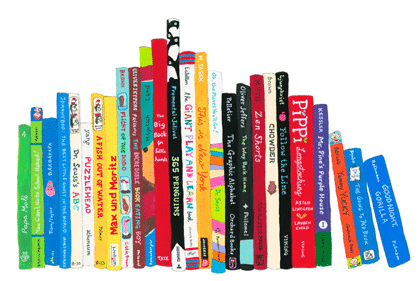
It is not easy to become a published author of children’s books. Children’s book authors must work on their craft and be savvy about getting their work published—otherwise, the rejection pile awaits their hard work.
These recommendations will make it easier to become a published book writer
Become Familiar with Children’s Book Writing
Reading published children’s books is an education. Your work needs to appeal to children. Learn how to communicate with your audience by reading children’s literature.
A more formal education is also an option. Take a class, or get a degree in writing for children, if you have the time and money. Vermont College offers a graduate degree in writing for children that only requires 11 days on campus per semester. Check it out along with other nearby options.
Learn about Publishing
Finding out how and where to submit your manuscripts is an important part of the process. Check out the Children’s Writer’s and Illustrator’s Market and Writer’s & Illustrator’s Guide to Children’s Book Publishers and Agents. These reference resources contain useful information about publishing.
Read other books about publishing such as the Complete Idiot’s Guide to Publishing Children’s Books. Other publishing resources include the Literary Marketplace, Publishers Weekly, and Writer’s Market.
Consider Joining an Organization
Join the Children’s Book Council and/or the Society of Children’s Book Writers and Illustrators. SCBWI’s website is: www.scbwi.org. You may also be able to find a SCBWI advisor in your state and/or a writers’ group. By joining the national organization, you automatically become a member of its state affiliate. SCBWI holds workshops and conferences.
Write What You Want
Do not try to follow a trend. Be authentic. Your authenticity will shine when you write what you want and know, not what you think will sell.
Get Feedback about Your Writing/Manuscript
Feedback can improve your writing. Get feedback through a writers’ group, workshop, or other resource such as the Highlights Foundation which helps authors and illustrators of children’s literature hone their craft.
Get Professional Assistance
Professional assistance is helpful when a writer deals with publishers. SCBWI has a list of agents. If you cannot afford a lawyer, join the Writers Union. It offers a contract review service.
Adhere to Publishers’ Guidelines
Learn how to write query letters. Query letters are your marketing pitch. After you have identified potential publishers, follow their submission guidelines. Only contact editors if the submission guidelines permit.
Use the Feedback from Editors
Personal rejection letters from editors are an educational resource. You will learn about their preferences and how to improve your work from this feedback. Keep a record, so you have this information for available reference.
Do not get discouraged by rejection letters. Getting published is not easy, and all published writers get rejection letters. You can realize your dream with persistent commitment.
- Published in Writing & Editing Resources
Don’t Get Duped by a Fake Literary Agent!

Thousands of novice writers looking for literary agents fall for a scam because they do not know where, or how, they can locate agents. Fake literary agents ensnare uninformed, gullible, novice writers and persuade them to part with their money. Even educated professionals in other fields, such as lawyers, can become victims of these unscrupulous predators.
According to a Washington Post article by Linton Weeks, James Fisher, a former FBI agent estimated that over 10,000 hopeful writers have lost over 50 million USD per year. This “genteel racket” has even inspired counterparts in India, according to a blog post by Tanuj Khosla on the Publishing Perspectives website.
Why Writers Fall for Fake Agents
Anyone can be an agent. Literary agents are not licensed, or scrutinized, by a regulatory or professional organizations. Jim Fisher’s book “Ten Percent of Nothing: The Case of the Literary Agent from Hell” is about the first case that led to a criminal conviction. In his edinboro.edu blog, Fisher described the six basic scam types in a post about “The Genteel Racket.” These swindles fleece novice writers before the representation contract is signed and after the signing of the contract.
Manuscript Evaluation Fees
Unpublished writers who are not picked up by legitimate agents are easy victims for this low-level swindle. Writers who fall for this scam, and do not learn from this mistake, are vulnerable to other scams.
Manuscript Editing Fees
Writers are drawn into this scam by fake agents who tell them editing is required before the works can be taken to publishers. The lure of this fraud preys on the belief that the work is worthy of being published and the defrauder has the connections and experience to make it happen. Authors suffer even more if they re-write their books based on the feedback they receive.
Phony Publisher and Agent Referral Kickback Schemes
These schemes create phony publishers and literary agents that refer the writers to editing services. This fraud works with the phony publishers and literary agents soliciting manuscripts through direct mail ads, ads placed in magazines, publishing directories, and other venues that seem legitimate to aspiring writers.
Fraudulent Contracting and Marketing Charges
In these schemes writers are charged for signing agent representation contracts and afterwards for the “marketing” of the manuscripts to publishers. Consultation, handling, and associated fees fall in these two categories.
Legitimate literary agents have a proven book sales record and they never charge manuscript review fees. They will not edit manuscripts or suggest editors. They also do not charge for marketing and related fees. Legitimate agents are compensated after the books are sold. Their payment is charged as a percentage of the advance and royalty payments made by publishers. Be careful and only give your manuscript to authentic agents.
- Published in Writing & Editing Resources
Check Out Our New IAPWE Social Media Profiles

The IAPWE has new social media profiles at Tumblr (https://iapwe.tumblr.com) as well as Instagram (https://instagram.com/IAPWE) and Pinterest (https://instagram.com/IAPWEofficial).
Please feel free to check them out, as we will be posting new updates about the IAPWE on our social media profiles in addition to our blog. These updates may also include news about other people and organizations that have been helping to support and/or spread an awareness of literacy in their local communities.
If you’re not already a member of our association, you can apply for membership at https://iapweorg.fixed-staging.co.uk/apply. We hope everyone has a happy and health holiday!
– IAPWE Team
IAPWE | International Association of Professional Writers & Editors
- Published in Writing & Editing Resources
An Introduction to Book Packagers

Book packagers offer another way for writers to get published and for editors to be employed in the publishing industry. Packagers are independent companies that create products for publication by imprints of trade book publishers. Trade book publishers publish the books that are sold in bookstores serving the general public. Both large and small publishers use book packagers to enhance their brands.
Invented in England
Paul Steiner of Chanticleer Press introduced book packaging to the American publishing industry. Originally, the company was the subsidiary of a British company; it became independent in 1952. By the time he passed away in 1996, Paul Steiner had launched a whole new way of publishing books in the United States that had grown from strength to strength.
What Book Packagers Do
While some packagers deliver printer-ready books to publishers, others may rely on the publisher for finalization. The amount of work done by packagers varies, as does the compensation they receive from publishers.
Why Publishers Use Book Packagers
Both large and small publishers appreciate the services provided by packagers. By relying on book packagers, large publishers can go into specialty fields like art or licensed books without hiring more staff. Small publishers with small staffs can get more accomplished with the use of packagers. Ever since Chanticleer Press was established, heavily illustrated books have been an area in which packagers have shone from the start.
Book Packagers Work in Several Genres
Books as varied as the National Audubon Society’s Field Guide series, Andrew Greeley’s The Cardinal Sins, New York Public Library Desk Reference, and most young adult books have been produced by book packagers. Packagers are no longer limited to any publishing genre, although they dominate certain genres such as young adult books, illustrated, and nonfiction books.
Some of the leading nonfiction genres include diet, cooking, design, pop culture, fashion, lifestyle, pop psychology, relationships, and parenting. So many companies are involved in this aspect of publishing that the quality of their product varies also.
Packagers Offer Reliable Work
Working for a book packager offers a way to build published credits and writing/editing skills. Generally, writers do not own the intellectual property of their contributions and do not receive royalties. Compensation for writers varies. Some packagers pay a flat fee; others split the proceeds or take a portion of the writer’s royalties.
Reputable packagers value talent. They give novice writers a chance and use writers that have worked with them previously.
- Published in Writing & Editing Resources