
Genres of the Most Popular Self-Published Fiction Books
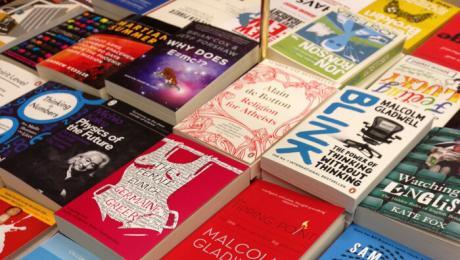
The most popular publishing genres also show up as the most popular in self-publishing. When books are read for entertainment, readers focus on genres they like. Writers who want to self-publish and make a living at it should consider writing in the genres that have large readerships.
Half of Amazon’s self-published e-book bestsellers are category romance, science fiction, and fantasy novels! Their readers are devoted to these easy-to-read and engrossing novels. They offer sheer escapism. And, readers of these genres have clearly defined interests that authors can appeal to.
Romance is the most popular genre. Happy endings and escapism have made romance an enduringly popular genre. Science fiction, fantasy, mystery and crime are also leading genres.
The Romance Category
Romance as a publishing genre has the lion’s share. Romances have forty percent of the market share of Amazon’s e-book sales. Like other genres, romance has subgenres as well such as contemporary romances, historical romances, romance mystery, Christian romance, westerns, and erotica. Even though “Fifty Shades of Grey” is in the erotica genre, erotica actually has a very small market share of the romance genre.
Bestselling romance writers, like Lindsay McKenna, are able to move from traditional publishing houses to self-publishing with some success. McKenna started self-publishing in 2014, after leaving Harlequin. In 2015, she joined Kensington; however, she did not leave self-publishing behind.
Science Fiction and Fantasy
Almost half of the science fiction and fantasy books sold on Amazon are self-published. Books in this genre invite readers to immerse themselves in alternate universes.
The Mystery and Thriller Categories
Mysteries and thrillers also sell very well. Readers who enjoy problem solving and getting their hearts thumping for entertainment enjoy this genre.
The successes of self-published authors indicate there is room for many more such success stories. Books by Deborah Bladon, Vi Keeland, Tijan, and Penelope Ward made it to the New York Times bestseller list for digital books in 2015.
The self-publishing option is becoming more mainstream. Crossover authors are on the rise in both traditional publishing and self-publishing. These hybrid authors make the most money, according to a survey by Digital Book World. Crowdfunding remains a popular platform for publishing projects. If you are worried about money, explore the crowdfunding option. Keep in mind that to build readership, many series book authors have offered the first book for free.
For any genre, marketing is the key to success. If you do not want to write a genre book, you can remain true to your vision and see how it goes. Readers will notice if you have to force your writing. Consider generating some crossover appeal, if making a living as a writer is your goal.
- Published in Writing & Editing Resources
Writing Style, Plot, Pacing, and Book Marketing Depend on the Selected Genre
Every genre has distinct rules and reader expectations. Readers often select their reading material by genre. Choosing the genre helps in plotting, constructing the appropriate writing style, and selling the book to the right audience.
Publishing success depends on the category in which the book is marketed. For instance, a general fiction book will not sell well as a romance, because the plot will disappoint reader expectations. Even when genres are similar, the plot will determine which category attracts the most readers. Readers of some genres have firm expectations, such as a happy ending in a romance book.
Genres and Pacing
Even though mysteries and thrillers are similar genres, one is more plot-driven than the other. In thrillers, more time is needed to create the scenario; however, in mysteries the end has already transpired. This means writing a thriller involves more world-building, and mysteries can focus more on character development. Thrillers are also faster-paced. The informative Mystery Writers of America is a good source for tips.
Thrillers and suspense novels involve trying to prevent something very bad from taking place. These plot-driven books do not allow the writer to dwell much on character development. In the hybrid mystery–suspense genre, the pacing is quicker, but a crime has already occurred. However, the rush to prevent something from happening remains and quickens the pacing. Check out the informative International Thriller Writers website for more information.
Fantasy and science fiction involve world-building, and the more world-building in the novel, the longer it is. The Science Fiction and Fantasy Writers of America provides more information. For horror books, the Horror Writers Association is a good resource.
In character-driven literary fiction, the pace is slower, and the plot reveals the personal evolution of the characters. The choices made at critical junctures challenge the protagonist’s character. This is why plot remains important, but character development is the dominant factor in literary fiction.
Writing Style and Genres
Skillful writers use precise language, but the words contribute to sentence fluency—the flow of words in sentences. Skillful writers use different types of sentences with different sentence flows and lengths to achieve the desired effects. They know that variation prevents attention-killing monotony.
Capable writers arrange the words in sentences and use sentence structure and sentence variation for optimal effect. However, these wordsmiths write in the context of the genres they select. In literary fiction, for instance, the emphasis is on the prose. In faster-paced genres, the writing style uses more action words.
Plotting and writing become easier once the genre is selected because genre-specific rules and reader expectations discipline writers. Understanding the ground rules means knowing which critical elements are necessary. The rules and expectations also help writers to write something that sells well.
- Published in Writing & Editing Resources
The Art of Turning a Book into a Screenplay

How does a writer create a screenplay from a manuscript? The writer needs to know how best to transform the content of the manuscript so that it is suitable for the screen. A writer needs to think outside the box because writing a screenplay requires a different skill set.
From a Solitary Creator to Multiple Creators
The process of screenwriting also involves collaboration. It is not the same as having an editor refine the manuscript before publication. The optimal transformation of a book into a screenplay requires a different approach.
A screenplay is also the primary stage of a collaborative process that may involve several rewrites as the material is adapted for the screen. The screenplay as initially scripted is merely the blueprint for the movie that unfolds during a creative collaboration.
Differences between Book and Screenplay Writing
The first difference is that readers read a book to absorb the words as written, but the movie audience absorbs the content from the visual and spoken words on screen. Moviegoers will not discover the inner workings of the characters’ minds through prose; they can only figure out what is visible through actions, dialogue, facial expressions, and movements of the actors.
Cutting the Content to the Bone
Typically, a single page of a script is the equivalent of one minute on film. As movies normally run for two hours, this means the written screenplay will be about 120 pages in length. Characterization may shift or alter in the storytelling process. In some movies adapted from books, protagonists have been combined to create a new screen character.
Power Passes to Moviemaking Professionals
The novelist will have to rely on professionals experienced in the movie-making process to bring the written words to life. Unless the screenwriter is also the director, producer and executive producer, power is in the hands of the moviemaking professionals.
The director’s vision defines what is put on film, but the director is selected by the producer. The interpretive role is in the hands of the actors who are cast to embody the characters as described in the book. Their skill can create multidimensional characters.
Ultimately, the director and producer decide which parts of the script to keep and which they will ignore or discard. They may require the writer to revise some parts or choose another scriptwriter to do it.
The author is the prime creator of all that appears in a book’s content. As a screenplay writer, an author participates in the unfolding creative process of creating a movie. Often what is depicted in the movie is quite different from the book it is inspired by or based on. Optimally, the screen version lives up to the standard set by the original material.
- Published in Writing & Editing Resources
Why Was British WW I Poetry so Memorable?

In the annals of poetry, the First World War is known for some of the most moving war poetry ever written. The soldier-poets of the First World War left a deep mark. These war poets were exemplified by Wilfred Owen (who perished a week before the end of the war), Siegfried Sassoon (fellow poet and mentor), and Charles Hamilton Sorley in whose kit was found, “When you see millions of the mouthless dead,” which posthumously became one of the most celebrated poems of this period.
New Technology of Mass Warfare Used for the First Time
Ten million soldiers died along with seven million civilians during World War I. The horror profoundly influenced those who were engaged in the war directly or indirectly. Poets expressed their feelings of loss and pain about brutalities they witnessed with the enduring power of powerfully moving and rich poetic verses.
Potent Mix of Patriotism, Disillusionment, and Educated Men
The soldiers in the trenches included many highly educated young men from civilian backgrounds, who mentally and emotionally experienced war differently. The ingredients of memorable British WW I poetry were a powerful combination of education, patriotism, and disillusionment with the experience. In this global conflict, powerful new weapons of war were used. Persistent firing for days on soldiers cowering and fighting from the trenches caused psychological trauma.
From Patriotism to Disillusionment
Rupert Brooke was the first war poet of note. His poem, “The Soldier,” captured the patriotism felt at the start of the war. But as the war dragged on, disillusionment marked the poetry of the poets who followed. Wilfred Owen and Siegfried Sassoon symbolized the pain of their generation.
The beauty and pathos of this poetry can be seen in the work of Wilfred Owen, regarded as one of the best war poets in the English language. He wrote from the heart and expressed his evolving psychological and physical experiences through the medium of poetic verse. His reputation rests on the poetry he wrote during a short period of 15 months.
Owen’s famous, “Dulce et Decorum Est.” described the horrors of a mustard gas attack. Owen was a devout Christian who wrote to his mother in 1917, a year before his death in 1918, “I am more and more a Christian.” He came to believe poignantly, “Suffer dishonour and disgrace, but never resort to arms.”
A commemorative stone inscribed with the names of 16 of the representative poets of the First World War was unveiled in Westminster Abbey on November 11, 1985. The quote inscribed on the stone was taken from a poem of the quintessential war poet of the era— Wilfred Owen. In Britain, poetry defined what people understood about the experience of the Great War as expressed by those who were on the front lines.
- Published in Writing & Editing Resources
The Subgenres of Historical Fiction
What is historical fiction? An accepted definition is that it is fiction set 50 or more years ago and requires a writer’s reliance on research. Sir Walter Scott in England began the genre we recognize as historical fiction, but its origins lie in the more distant past. Historical fiction’s appeal has not dulled over time, although it has reached new heights from the 1990s to the present.
Over time, this genre has developed more than 10 identifiable subgenres.
Traditional Historical Fiction
The traditional form is what is generally thought of as historical fiction. It typically has a historically accurate plot. Seminal examples among modern writers include Colleen McCullough’s “Masters of Rome” series, and Sharon Kay Penman’s books set in the Middle Ages of Great Britain and France.
Multi-Period Epics, Series, and Sagas
James Michener’s “Chesapeake” covered the history of a location from its Native American past to modern times. Norah Loft’s “The Suffolk Trilogy” covered the history of one house from the 14th century to the 1950s. The “North and South” trilogy by John Jakes is a saga of how the Civil War tests the ties of two families, a Northern family from Pennsylvania and a Southern one from South Carolina.
Historical Romantic Fiction
An example of historical romantic fiction is Anya Seton’s “Katherine” about a real-life love story between the Plantagenet John of Gaunt, Duke of Lancaster and Katherine Swynford, Geoffrey Chaucer’s sister-in-law.
Historical Western Fiction
These comprise stories about the American West. How they cover the subject matter has evolved since they were first written in the 1800s, shifting from an unsympathetic view of Native Americans to a more sympathetic perspective in recent time.
Mysteries, Thrillers, and Adventure Novels
An example of historical mysteries is Ellis Peters’ series about crime-solving Brother Cadfael, a twelfth-century monk and herbalist. Peters’ “Cadfael Chronicles” is credited with popularizing this subgenre.
Historical thrillers include “Enigma” by Robert Harris, “The Coffee Trader” by David Liss, and “The Alienist” by Caleb Carr. Bernard Cornwell’s series about Richard Sharpe is an example of historical adventure.
Time-Travel, Alternate Histories, Fantasy, Literary and Christian Novels
“The Shining Girls” by Lauren Beukes is a historical time-travel thriller, and Connie Willis’” Doomsday” is another example of time-travel historical novel. “The Years of Rice and Salt” by Kim Stanley Robinson is an example of an alternate history novel.
Michael Livingston’s “Shards of Heaven,” Tim Powers’ “On Stranger Tides,” and Susanna Clarke’s “Jonathan Strange and Mr. Norrell” are examples of historical fantasy. Catherine Marshall’s “Christy” is an example of a Christian historical fiction.
The appeal of reading about the past never fades. Inventive writers delight new generations of readers by finding endless inspiration.
- Published in Writing & Editing Resources
Young Adult Historical Fiction and Its Value

Historical fiction can offer more than escapism to adolescent readers. Re-creations of history in historical fiction (when based on accurate evidence) sheds light on history in a way that facts by themselves cannot. It can enlighten young adults (YA) about ways of being and conflicts in another time, and also resonate with their own pathway to maturity.
Since the 1990s—A New Era of Popularity
Prior to the 1990s, teachers had limited choices in what they could assign to their students. However, from the mid-1990s onwards there has been greater choice in historical fiction for this age group. Scholastic’s “Dear America” series boosted the genre’s popularity, and genre-blending fiction offered non-history loving YA readers a different reading experience.
Publishers now offer individual novels and series of historical fiction for this age group. As of February 2017, the Young Adult Library Services Association (YALSA) will have a Teen Book Finder Database—a one-stop shop for finding award winners and selected lists. Users will be able to search the database and print customized lists. This will make it easier for teachers to select reading lists. YA writers should take note, as school libraries are major purchasers of books in this category.
The Challenge for YA Fiction Authors
Young adult fiction authors have to create an attention-getting and reader-sustaining story, make a certain period interesting for YA readers, and devise a story that is suitable for that period. To make it more palatable for young female readers, some authors distort the reality of women’s roles in the past and the customs of that time. However, it is better to explain the differences as YA readers are capable of understanding that people lived differently in the past.
An Example of Genre-Bending YA Historical Fiction
Maggie Stiefvater, a YA author herself, selected “Code Name Verity” by Elizabeth Wein as her favorite book for 2012 in her list of “5 Young Adult Novels That You’ll Never Outgrow,” published on December 20, 2012. This book illustrates the genre-blending appeal that can hook YA readers of this or an older age group. The novel is about two girls who join the British war effort in World War II.
YA Fiction Also Enjoyed by Adults
A market that has developed in the past 50 years, the children’s book industry has expanded exponentially. A major reason is that it also attracts adult readers. A 2012 survey revealed that 55 percent of YA fiction readers are adults. Young adult books often outsell even the most popular adult books. Young adult fiction excels in providing escapist appeal.
The inventiveness reflected in YA literature is rare in adult literature. Adults also enjoy the nostalgia evoked by YA historical fiction and other subgenres of the YA fiction category.
- Published in Writing & Editing Resources
Norah Lofts—an Underappreciated Author Writers Can Learn From and Enjoy
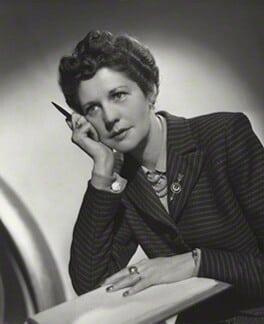
Alison Weir has publicly praised Norah Lofts and has also been a force in the republication of Lofts’ books. There is growing appreciation of this unheralded writer.
Lofts was a history teacher who became a prolific writer of mostly historical fiction and biographies, although she did write mysteries and other types of fiction as well. Her eye for detail and place and her use of book series offer writers an opportunity to learn from an expert in historical fiction.
Sir Walter Scott—the First Historical Novel Author
A genre first identified with Sir Walter Scott and “Waverley,” historical novels have received critical recognition in this century. Historical fiction is no longer considered middlebrow and beneath critical esteem. The 2014 Man Booker Prize was awarded to Richard Flanagan’s “Narrow Road to the Deep North,” and both of Hilary Mantel’s books about Thomas Cromwell received the Man Booker Prize as well. James Robertson’s books about Scotland have also earned critical acclaim.
Re-reading Scott’s first book can still move readers in our time because of its treatment of the protagonist, what he experiences, his evolution, and the difficult issues he wrestles with. Scott followed his initial success with many historical fiction novels, primarily to get out of debt. Then, as now, historical fiction gained a large following.
Norah Lofts and the Female 20th Century Historical Fiction Authors
Female authors of historical fiction dominated the genre during the 20th century, although their work varied in quality. Norah Lofts, Anya Seton, Mary Renault, and Eleanor Hibbert (who wrote as Victoria Holt and Jean Plaidy) made their own interpretations of history and its characters. Norah Lofts produced outstanding books focused on old houses and their histories. Her “The Suffolk Trilogy” stands out as historical fiction created about a place.
Alison Weir has particularly praised the “Suffolk Trilogy” as the best historical fiction she has ever read. She has also described the trilogy as “one continuous book” even though it is a set of three books published years apart. “The Town House” was published in 1959, the “House at Old Vine” in 1961, and “The House at Sunset” in 1962. Shifting viewpoints by showing the unfolding of time through different eyewitnesses/perspectives gives these books additional layers of meaning.
For a new talent interested writers can check out Sarah Gristwood’s first fictional work, “The Girl in the Mirror.” Alison Weir, on her website, has praised this book for setting “a new benchmark for historical novels.”
- Published in Writing & Editing Resources
Discipline: A Needed Asset for Writers

Some say that the main thing a writer needs in order to succeed is talent. Although this is certainly true, a close second for the most needed asset in writing is good old-fashioned discipline. You can have all the talent in the world, but if you don’t put the pen to the paper then nobody will ever know it.
Different Types of Writing Discipline
There are many different types of writers and many different types of discipline that will work for each writer. One form of discipline that may work very well for one writer will not for another, so it is important to search for the level of writing discipline that will work for you.
If you do not suffer from writer’s block or lack of inspiration, set a writing goal for yourself each day. If you are working on a novel, for example, try writing one perfect page per day. This may not sound tough, but you will find that it is quite a challenge. Doing so requires discipline and builds up your disciplinary skills. And just think, if your novel is 250 pages, then in less than a year that first draft will be completed.
Other writers spend weeks, months, or even years waiting for inspiration. If they attempt to write during periods of non-inspiration then the results do not come out well. If you are one of these writers, it doesn’t mean you can’t develop a disciplinary routine. Try to set a goal to write something during a specific timeframe. For example, start a novel outline and vow to complete one outlined chapter per week. Working on this outline may get you excited and thinking about the plot and inspire actual writing of the story.
Your Favorites Had Discipline, Too
If you’re skeptical or hesitant about applying discipline to your writing or are simply trying to come up with a method that works best for you, look to your favorite writer for help. Do you love Ernest Hemingway? Keep in mind that Hemingway, when working on a novel, would write religiously each day from just after breakfast until well into the night. Is Philip K. Dick a favorite of yours? When working on a novel he would write from the time he woke up until the time he went to sleep, pausing only to eat.
Behind every talented writer is the discipline needed to get that talent down on the page properly. You already know that you have the talent; now adopt the discipline to reach your desired accomplishments as a writer.
- Published in Writing & Editing Resources
Serials and Serialized Fiction—No Longer Fringe Niches of the Publishing Industry
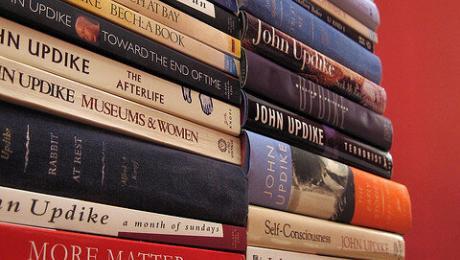
The self-publishing industry and digital media have given new life to serials and serialized fiction. They are no longer “for-free” publications or limited to magazines. A serial is a story written in segments. Daytime soap operas are examples of television serials. Serialized fiction, on the other hand, is a complete story published in segments.
Online Reading, Serials, and Authors’ Intimacy with Readers
In the past, writers like Dickens and Trollope who wrote long books released them as they were writing. George Eliot’s “Middlemarch” was also released this way. Sometimes reader response would make authors modify their work, as happened with Charles Dickens. Dickens altered the end of “Dombey and Son” in response to reader comments.
Serialized fiction made the novels more portable and created a community of readers. Today, digital media is creating a new community of readers as E-readers and mobile devices make fiction portable in the internet age. Successful science-fiction writer John Scalzi began with the serial, “Old Man’s War,” and “50 Shades of Grey” was a serial before it was published traditionally.
E-readers and mobile phones have changed the habits of readers who frequently use these reading sources. Writers have recognized that serials build their readership and allow them more creative freedom than traditional book publishing.
Max Gladstone is among a growing number of writers who have joined today’s serial writing genre. Gladstone is a writer for two fantasy serials. The writer of the “Craft Sequence” series is one of the writers on the Serial Box’s “Bookburners” and “The Witch Who Came in from the Cold” serials.
Capturing Readers with Serialized Fiction
The serialized book publishing method has a proven history of boosting sales and creating anticipation. A French businessman used serialized fiction to create a readership for his daily newspaper in 1836. He serialized Balzac’s novel in segments to hook Parisian readers. That same year serialized fiction began in England with the segmented publication of the “The Pickwick Papers.”
With TV dramas like “Game of Thrones,” House of Cards,” and Downton Abbey,” and serial radio programs hooking their audiences, book publishers would like to boost sales by creating a devoted audience of serialized fiction readers. One of the creative writers taking advantage of digital media is Julian Fellowes, the creator of “Downton Abbey.” Fellowes is publishing his new novel, “Belgravia,” as serialized fiction with weekly chapters released via an app.
Segmented fiction offers writers a new way to reach the reading public. As people spend time waiting, they can be immersed in fiction. Research has also found that people prefer occupied time and complain about unoccupied time. How long will it be before writers can earn income through businesses who want to distract their waiting consumers?
- Published in Writing & Editing Jobs, Writing & Editing Resources
The Distinctions between Mystery and Suspense Novels

In suspense, the readers are waiting for an event to take place. Unlike a mystery, in suspense the readers/observers are informed of what is at stake in the beginning. They become observers of the story on the side of the protagonist and become involved in the unfolding drama.
The traditional mystery may lack the emotional tugs and vicarious thrills suspense provides. Instead, mysteries typically provide puzzles for readers or the audience to solve. They can involve suspense in stories where a character, or protagonist, is in danger while the villain has not been apprehended. In a traditional mystery, the arc of the story is about revelation. The threat is more immediate in suspense, whereas in mysteries the conflict/revelation is delayed.
Advantages of Writing Suspense Thrillers
Writers have more freedom in the suspense genre than in the mystery genre. This is because suspense writers can create characters with different points of view, including the antagonist.
In a suspense novel, intensity builds as the protagonist finds a means to overcome the villain’s threat. Choices, clues, and twists keep readers in suspense as they follow the protagonist. Suspense immerses the readers in the story when they identify with the protagonist’s plight. Their sense of suspense increases the more they are engaged by the choices facing the protagonist and the degree of contrast between the protagonist and the antagonist. They experience vicariously the thrills of fear and anxiety.
Advantages of Writing Mysteries
Good mysteries, whether they are whodunits or whydunits engage their readers’ minds. Readers become involved because mysteries reveal a character’s perspective through unresolved conflicts. Mystery readers are hooked by the need to know what happens to the characters they identify with.
To maintain the mystery, mystery writers have to hide the antagonist’s identity or conflict between protagonist and antagonist, until it is time to reveal it.
A good mystery is a window that reveals the human condition in that context. In successful mysteries, a character’s psychology is fascinating for readers, as many fans of this genre are curious and intelligent.
In modern mysteries, other elements such as history, culture, and romance have attracted a wider readership than ever before. As a result, they are now second only to romance in popularity.
To get started, inexperienced writers should read and analyze mysteries and/or suspense novels. They should check out best-seller lists and the names cropping up in anthologies and awards lists. The awards usually recognize works that have novel approaches that broaden the genre’s boundaries, or are exemplary representatives of the genre.
- Published in Writing & Editing Resources